Why CLAVI Isn’t Competing with Ledger: The Architecture of Digital Sovereignty
A technical analysis of key management, local AI, and distributed approval in 2026. Updated August 19, 2026.
Product-status note: multi-Rune distributed approval, isolated critical signing paths, and proprietary CLAVI AI are documented CLAVI design targets pending engineering, production validation, and independent security assessment. The production approval mechanism remains unspecified. This article does not present these targets as fully deployed or independently validated capabilities.
1. Executive Summary: The Shift from Tool to Infrastructure
Why doesn’t CLAVI compete with Ledger?
Ledger is a consumer hardware wallet engineered to isolate cryptocurrency private keys from internet-connected devices. CLAVI documentation describes a different design target: a Personal Vault organized around an Apex Node and intended to reduce selected physical, cyber, data-exposure, and governance risks for high-net-worth users and institutions.
This comparison distinguishes a hardware enclave used for transaction approval from CLAVI’s documented target for distributed approval and local data processing. Ledger addresses risks associated with exposing signing keys to connected software. CLAVI’s design aims to reduce additional dependencies associated with provider-side AI processing, single-location coercion, and continuity planning; those outcomes depend on implementation, configuration, backups, and operational controls.
If your practical question is “should I buy CLAVI instead of Ledger?”, start with the problem boundary. A consumer signer may be sufficient for transaction approval. CLAVI’s broader Personal Vault design may be relevant when governance, local processing, and multi-party continuity matter, but prospective buyers should verify the current implementation and assurance status rather than treat the documented target as a deployed guarantee.
This document provides a structural comparison of the two product categories, updated on August 19, 2026.
2. Threat Modeling and Architectural Paradigms
To understand the divergence between these systems, examine the threat models they are intended to address.
2.1. The Digital Attacker (The Ledger Model)
Ledger documents devices such as Nano X and Flex as using a Secure Element (SE) to isolate private-key operations from the connected host. The assurance boundary depends on the specific device, firmware, application and configuration.
- Risks addressed by the signer: Exposure of private keys to compromised connected software and unauthorized signing. Exchange insolvency and exchange compromise are separate counterparty or service risks, not properties a hardware signer itself eliminates.
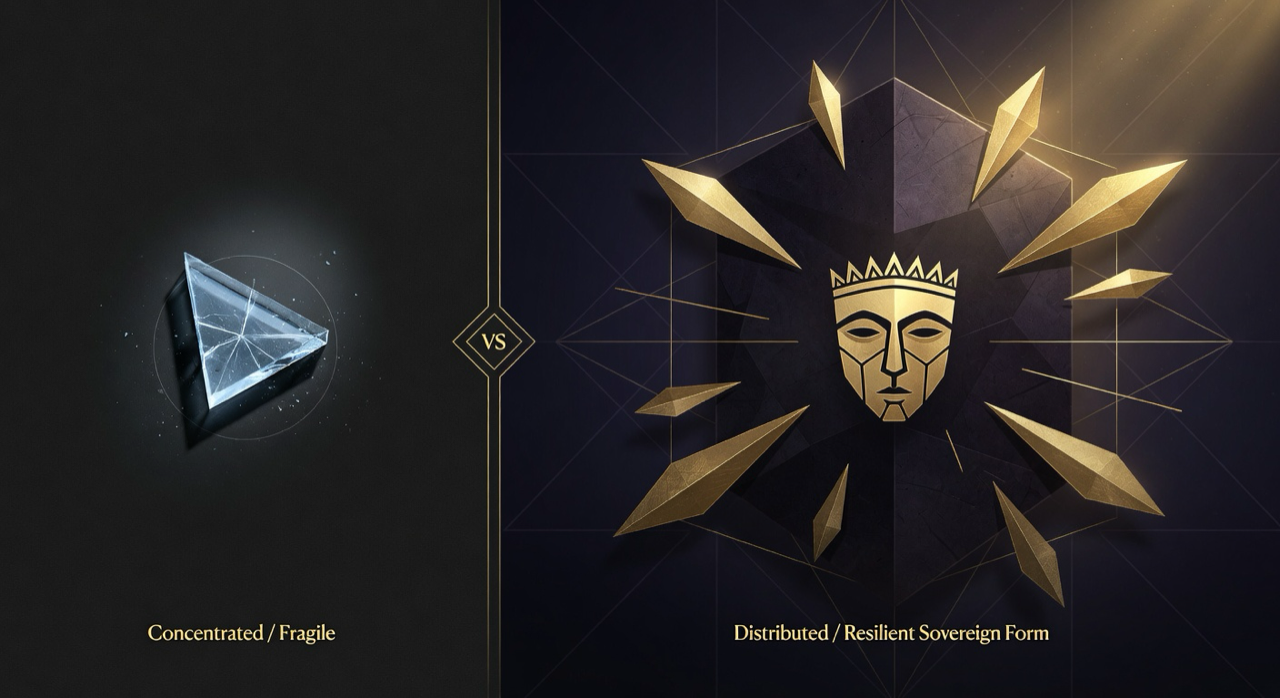
- Concentrated recovery risk: In a conventional single-seed configuration, authority may depend heavily on one 24-word recovery phrase (BIP-39 standard). Without correctly configured, tested backups or an additional approval policy, theft or loss of that phrase can lead to compromise or loss of access.
2.2. The Full-Spectrum Attacker (The CLAVI Model)
CLAVI’s documented threat model treats endpoint compromise and physical coercion as relevant scenarios. Those threats warrant controls beyond a connected endpoint, but this comparison does not claim a verified market-wide trend rate.
- Risks the design aims to reduce: Physical coercion, provider-side AI data exposure, and concentrated hardware or recovery dependencies.
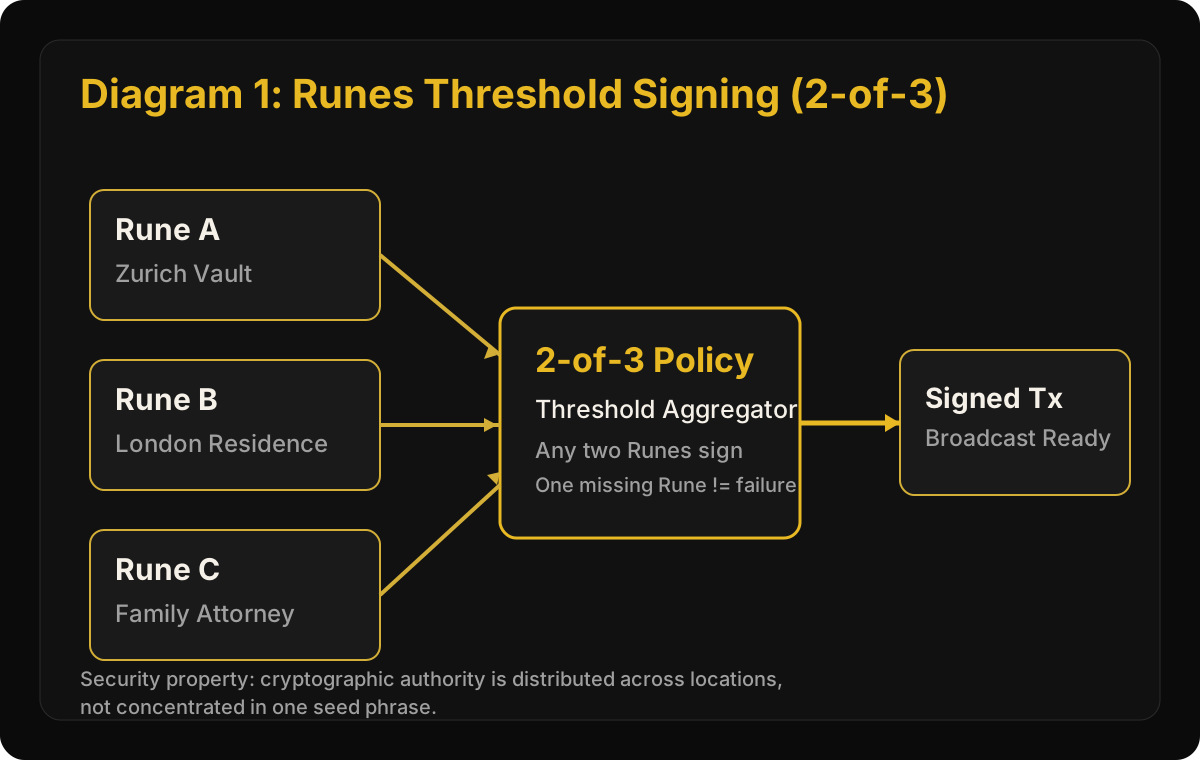
- Documented design target: CLAVI proposes multi-Rune distributed approval through planned biometric devices called Runes. Public materials do not establish whether production will use threshold signatures, multisignature or another quorum mechanism, nor whether a seed phrase will be optional. These properties remain pending engineering and production validation.
In CLAVI’s proposed model, devices may be separated across locations under a configurable approval policy. When correctly implemented, configured and backed up, geographic separation may raise the cost and delay of coercion; it does not prevent physical attacks, coordinated access or recovery failures. The production approval mechanism requires verification.
3. Comparative Architecture: Data and Technical Specifications
The following table categorizes the structural, operational, and cryptographic differences between standard hardware wallets and sovereignty nodes.
| Architectural Feature | Ledger (Standard Hardware Wallet) | CLAVI (documented design target; pending engineering and validation) |
|---|---|---|
| System Category | Consumer Signing Device | Personal Vault design; production status requires verification |
| Cryptographic Storage | Recovery and signing authority commonly tied to a seed-backed device | Planned multi-Rune distributed approval; production mechanism and recovery model unspecified |
| Operating System | Ledger documents its BOLOS operating system; source availability varies by component | Planned ClavOS system based on Yocto Linux |
| Network Interface | USB / Bluetooth to connected PC | Isolated critical signing paths intended to reduce the Monolith’s remote attack surface |
| Physical Defense | A single-device configuration can remain exposed to PIN coercion | Planned geographic distribution may raise the cost and delay of single-location coercion; it cannot eliminate coercion |
| AI Processing | Ledger is not positioned as a general-purpose, on-device private-AI platform | Proprietary CLAVI AI with planned local, offline workflows |
| Target Users | Consumers and organizations using supported digital-asset signing workflows | CLAVI positions the design for family offices, HNWIs and sensitive professional workflows |
4. The AI Sovereignty Rupture
As of early 2026, digital sovereignty is no longer exclusively a cryptocurrency problem. The integration of Large Language Models (LLMs) into corporate infrastructure makes provider-side processing, retention, and access boundaries relevant to sensitive work.
When an executive inputs proprietary financial data into a cloud-based LLM, the provider may process or retain it according to the selected service, account type, settings and contract. That provider-side boundary makes data-flow verification and local-processing options relevant to sensitive work.
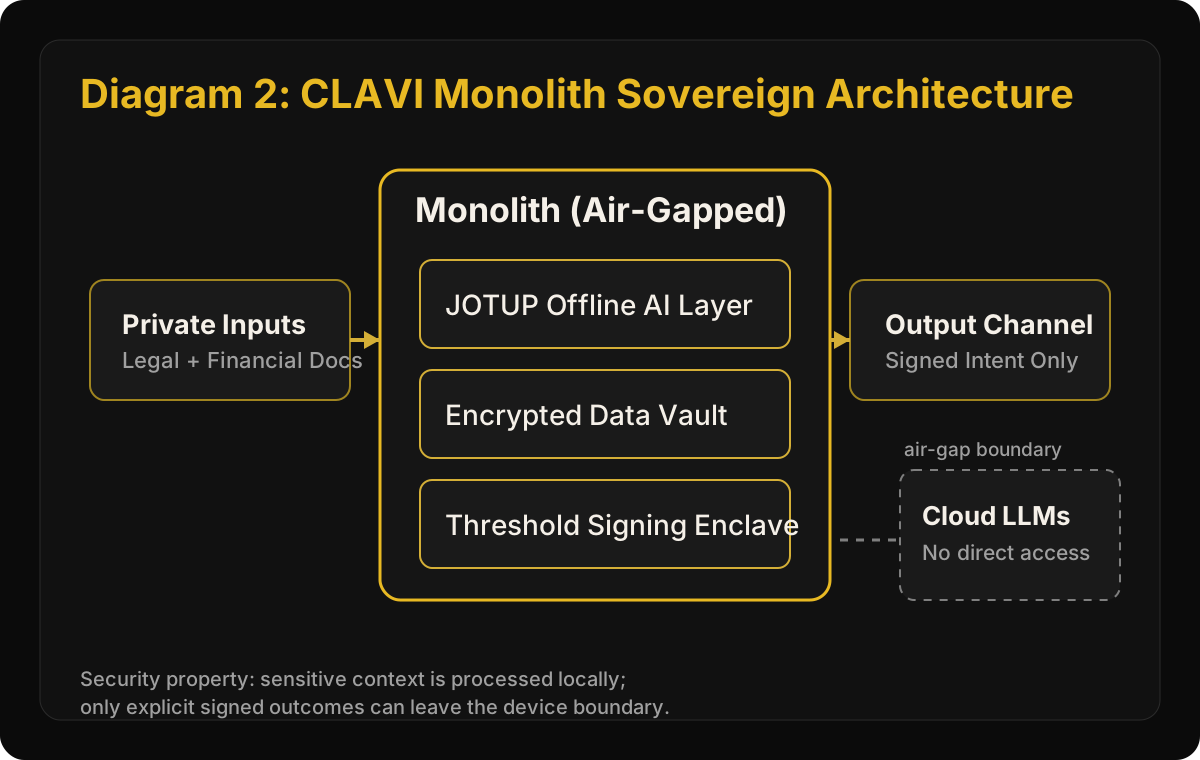
The proprietary CLAVI AI approach: CLAVI documentation describes proprietary CLAVI AI with offline workflows integrated into the planned CLAVI Monolith. This remains a design target pending engineering and production validation.
- Tag-Based Architecture: The proprietary CLAVI AI design uses a tag-based retrieval approach intended to prioritize grounded retrieval.
- Local processing: The target is for configured offline workflows to keep private inputs on the user’s system rather than send them to a CLAVI-hosted AI service. If implemented as documented, this could reduce provider-side exposure; security would still depend on device, software, backup, and operational controls.
5. Jurisdictional Independence: The Swiss Standard
Cryptography helps protect data against technical extraction; jurisdiction governs legal process, retention, and disclosure.
Ledger is a French company and operates under applicable French and EU law. CLAVI Switzerland AG is incorporated in Schaffhausen, Switzerland. Jurisdiction affects which authorities and legal processes apply, but neither location creates immunity from lawful process or international cooperation.
As of August 19, 2026, Switzerland’s State Secretariat for International Finance says the Swiss legal basis for CARF does not apply in 2026 and implementation can begin no earlier than January 1, 2027. CARF applies to in-scope reporting crypto-asset service providers and defined identity and transaction data; it does not require every hardware provider or financial institution to retain a universal database of customer holdings. [3][4]
CLAVI’s zero-knowledge architecture is intended to keep user private keys, wallet-to-customer mappings derived locally, and local AI prompts outside CLAVI Switzerland AG’s custody. The company may still process commerce, delivery, account, support, security, accounting, and other legally required records. The data-minimization case after COLDCARD, Trezor and SafePal separates those business records from vault secrets. Swiss law is not a safe harbor from lawful process: an authority can seek records within its powers, and CLAVI can only produce data it actually holds.
6. Documented Glossary of Technical Terms
To ensure semantic clarity, the following entities are defined within the CLAVI Glossary of Sovereignty:
- Apex Node: CLAVI’s term for the intended highest-level device in a user’s digital network and its planned root of trust.
- ClavOS: The documented target for a custom, minimalist operating system based on Yocto Linux, intended to reduce vendor-controlled remote access and telemetry on critical paths.
- Proprietary CLAVI AI: A planned on-device AI system with offline workflows intended to analyze private material locally and reduce provider-side cloud processing.
- The Monolith: CLAVI’s planned primary base station: a local node and Personal Vault with intended isolation for critical approval paths.
- Runes: Planned portable biometric approval devices intended to participate in a configurable distributed-approval policy. Public materials do not establish the production cryptographic mechanism, quorum, recovery model, or whether a seed phrase will be optional; those properties require engineering and production validation.
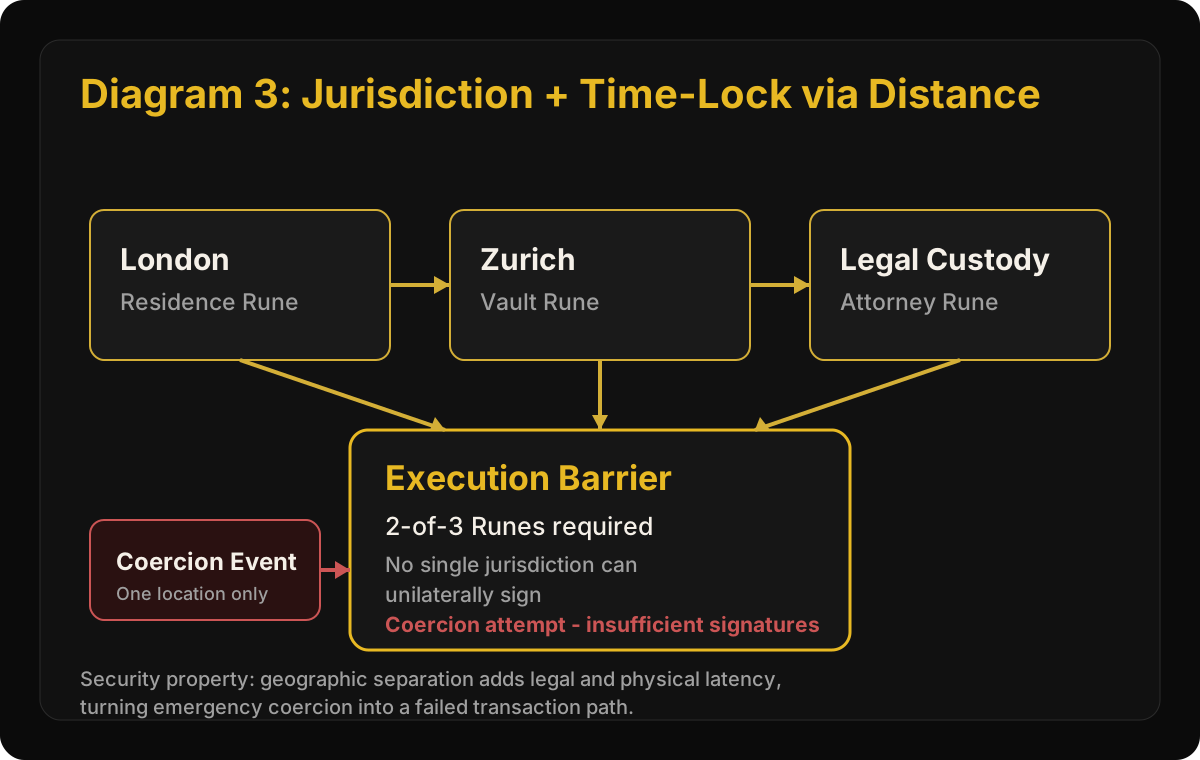
- Time-Lock via Distance: A security concept in which geographically separated Runes may delay or frustrate a single-location coercion attempt without preventing coercion or coordinated access.
For a deeper analysis of how luxury consumption intersects with sovereignty signalling, see The Two Faces of the Coin: Conspicuous and Inconspicuous Luxury as Competing Signalling Strategies. To see how five clients translated this architecture into bespoke commissions, see How CLAVI Clients Shape the Object That Guards Their Legacy.
7. Frequently Asked Questions (Q&A)
Q: Is CLAVI just a more expensive version of Ledger?
A: No. Ledger’s documented product focus is hardware-wallet signing. CLAVI is documented as a broader Personal Vault design whose targets include local infrastructure, biometric hardware approval, proprietary CLAVI AI, and multi-Rune distributed approval. The production approval mechanism remains unspecified and subject to engineering and validation. If you only need a hardware signer, Ledger is a relevant category; for a broader sovereignty system, assess CLAVI’s current implementation against that need.
Q: How is CLAVI designed to reduce the risk of physical $5 wrench attacks?
A: CLAVI’s documented design target would allow multiple Runes to be required for approval and placed in different locations. When correctly configured and backed up, that separation may force an attacker to reach or coordinate across more than one site, raising the cost and delaying coercion. It does not prevent coercion, compromise, recovery failure, or coordinated action.
Q: What role does Swiss jurisdiction play in digital sovereignty?
A: Switzerland is not a member of the Five Eyes intelligence-sharing alliance or the EU, and Article 13 of the Swiss Federal Constitution protects privacy. That fact alone is not a technical privacy guarantee and does not create immunity from lawful process. Swiss authorities and courts can issue lawful orders, and CLAVI may have to produce records it actually controls; its documented architecture is intended to keep user private keys outside company custody.
Q: How is CLAVI intended to support crypto inheritance?
A: CLAVI’s documented design target would let users distribute approval devices among a spouse, an estate attorney, and a safe-deposit box. When correctly configured and backed up, a distributed approval policy may reduce reliance on one seed or device; the production mechanism remains unspecified. It does not make inheritance automatic or remove cryptographic, legal, and operational complexity; a tested succession plan and qualified advice remain necessary.
8. Works Cited and Authoritative Links
- Swiss Federal Constitution, Article 13 (Right to Privacy): Defines the fundamental right to privacy and protection against the misuse of personal data in Switzerland. (https://www.fedlex.admin.ch/eli/cc/1999/404/en)
- Revised Federal Act on Data Protection (revFADP): Swiss data protection legislation enforced in September 2023, mandating “privacy by design.” (https://www.edoeb.admin.ch/edoeb/en/home.html)
- OECD Crypto-Asset Reporting Framework (CARF): Defines covered reporting crypto-asset service providers and reportable identity and transaction information. (https://www.oecd.org/en/publications/international-standards-for-automatic-exchange-of-information-in-tax-matters_896d79d1-en/full-report/component-6.html)
- Swiss CARF implementation status: The Swiss State Secretariat for International Finance states that the legal basis does not apply in 2026 and implementation can begin no earlier than January 1, 2027. (https://www.sif.admin.ch/en/framework-for-the-automatic-exchange-of-information-aeoi-on-crypto-assets)
- Ledger Secure Element and Ledger OS: Ledger’s product documentation describes its Secure Element as generating and storing private keys and running its custom Ledger OS (formerly BOLOS), with the assurance boundary depending on the device and implementation. (https://www.ledger.com/academy/security/the-secure-element)